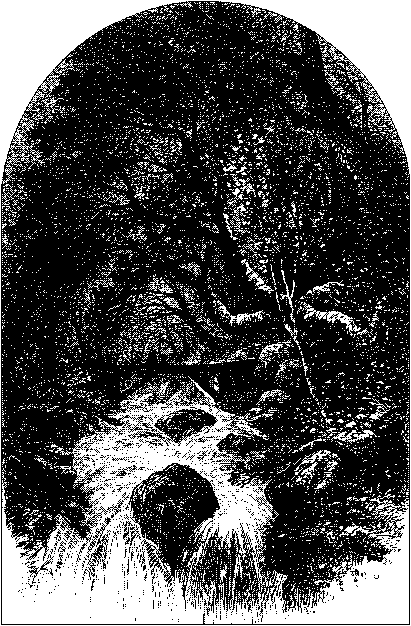
The mythical twins Siegmund and Sieglinde are sitting together on the wide bank of a river. The water speeds by them over beds of rocks, tumbles into eddies, disappears around the corner into a violent ravine. It shushes the air and all around it, listens to and hears only its own voice. For long sections, it is untraversable to all but birds. The bend came to them as an accident, though they have been here now a summer’s span. For the many months prior, Siegmund had followed and followed the river believing it would take him to the river Rhine. A stranger once told him when he was much younger that the Rhine was the all-river, the river that began one’s great journey to the sea. And the sea, Siegmund knew, granted safe passage to another world, perhaps one under different auspices, more favorable skies.
It was this world Siegmund wished to find with his sister, whom, under cover of moonlight, he had taken as lover without a second thought. As an outlaw, the sole man of his kind on this earth, who else could he love – who else could love him? This was how he justified himself not to himself nor to her – between them there was no need for justification at all – but to the heavens, even though he had long since abandoned them, shunned them as they had shunned him. To the both of them, the skies had kept silent always, silent like the house where she’d found him on her doorstep and where she’d been locked up for as long as the word woman could claim her.
When he thinks of that house, and the storm that led him to it, he can still feel his back pressed against the rough bark of the ash tree, the full brunt of his weight towering over his feet, can still hear his voice utter the vow of his needfulness. Hilt between his hands, the sliver of metal gave way for him, came down in a wide sweep, menacing, stalwart, and clean. The sword promised him by his father, the sword promised her by him, too, but, like him, also the sword that came too late to spare her. How, he often thinks, it must have smarted to her like a wound, day in and day out, one of many endured under the rule of the husband who brought her from thieves and who wed her into bondage. The tree dying around the sword, a reminder that nothing captive can thrive.
Siegmund remembers the mottled sight of the bruises – spanning wrists, under breasts, on the inside of thighs; the warm ache of her body against him and the tremor in his hands as she held him in kind. He remembers the sound of her voice in his ear whispering the name his father had given him, a name that had since gotten lost in the crannies of landscapes and beneath the tremulous surface of lies. The name that sounded like hers, two and three syllables that passed between them like water from the same vessel, like the peal, as she once put it, of a voice and its echo in the forest.
Siegmund can’t bear to think of her suffering – he would rather be forced to think of his own. But each night her dreams come to him in the night and think of it for him: dreams about being asleep with something moving inside him, about waking up sore in the mid-afternoon. Dreams about the blue shards of the sky trapped by the frame of the window, narrowed and narrowed by the view from the rug on the floor. Dreams about patience and waiting, about needing to speak always under his breath, about clawing his way out into the open world only to be dragged back in again by the roots of his hair.
But as Siegmund sleeps, to his relief, sometimes the days of hard struggle diminish. In their place are those that pass emptily, always the same. Feasts are prepared, tables set, dishes cleaned, stories endured and much more than stories, mornings streaming through the locked windows, the sweat of labor between his brows, the humiliation of the floor beneath his knees, the threatening grasp of a hand on his chin. And should Siegmund wake up, he often finds himself weeping. In need of comfort, he seeks it where it’s always been found, beneath the great blanket of stars.
For a long time, the two of them fled without ceasing, traveled as far as they could on guile and gold. Siegmund slept with the sword in its scabbard, pressed against Sieglinde whom he held close as he could in his arms. The river came to them late in the spring, a blessing. Like a star, they held fast to it, and, through field and woods, laid claim to it as their own. On one of its bends slouched a house that had long been abandoned. Someone’s brother or father went out one morning and never returned.
Shrouded by trees and far from the sounds of fire and footfall, they took respite there, lived, for the first time, the life each of them wanted, went to sleep together in the straw bed, awoke right as the dawn surfaced to fish in the shallows and forage for food. Most often they labored, for living alone was not easy, even though the earth had been kind to them, almost in seeming atonement for the hard endurance of the rest of their lives. In the evening, they made love, ate, and told stories – where each had gone and the things they had seen.
The more time she spent with him, the less, he noticed, her voice wavered. Often she sung his songs back to him, many of which Siegmund had written for her before she was his. They were songs he carried with him to pass the time – the time between midnight and daybreak, the time between the last meal and the next, which was often a long time, the long, perhaps even the longest time, too, between hope and despair, winter and spring, as he’d sung to her that first evening, his best song, he admitted, the one he’d practiced and perfected the most with naught but the birds as an audience, the birds, he believed, to whom he’d return after death.
From the periphery, two ravens watch the lovers in silence. On the bank of the river, Siegmund is braiding Sieglinde’s hair. To him, it hangs like spun gold down her back and broad shoulders. Long ago, he once did this for her as a child, legs splayed while she sat in his lap. Both remember how, over and over again, she’d tear the braid out so as to begin it anew, so that he could feel the smooth resistance of her hair between his fingers, and so she could feel the gentleness of those hands that were once the same size as her own.
Much time had passed between now and then, and so, to his tender glee, she had to teach him her secrets all over again, laughing all the while as she did so. And it is a gift to him always, the sound of her laughter, rare as it’s been in the air for so long. He runs the wood teeth of the comb through large strands of wet tresses. She is bare before him, having emerged from the water smelling of crushed flowers and the salt of dry skin. Before he begins, he kisses the sweep of her shoulder. To love someone, he believes, is the only thing that matters in this world.
One day not so long ago, she found him with his thumb in his mouth, his whittling knife red with his blood on the table. When she asked him what troubled him, his eyes when they met hers weren’t quite his. He said to her quietly, “When I taste blood in my mouth, I think of my father.” The sword in the tree, the hand on her throat, the glass shards in her palms with the forest before her, she must have been thinking about all of it as she said to her brother, “When I taste blood in my mouth, I think of him, too.”
The Abyss